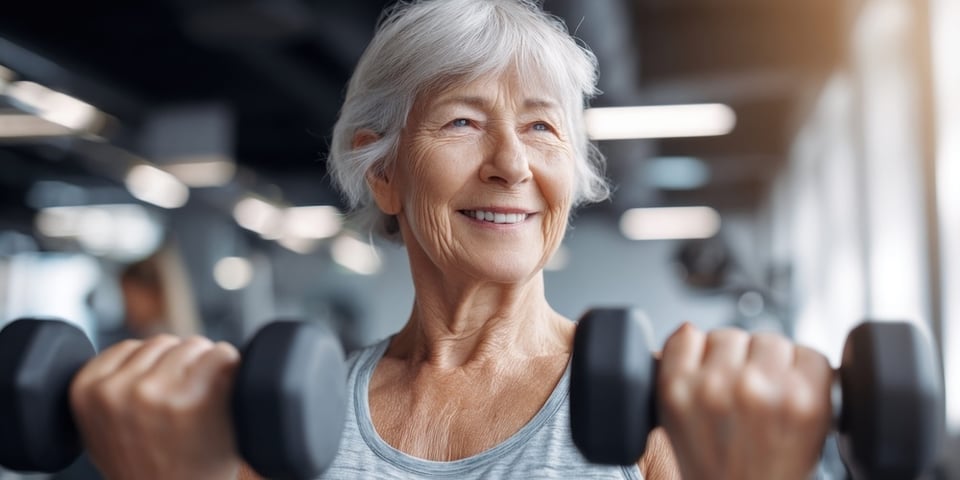

August 7, 2026 — In honor of National Wellness Month, the following article provides some ways to assess your physical wellness and track your fitness progress. Next month, in Part 2, we will discuss how to measure, assess and improve other aspects of personal wellness, such as cognitive and social health. After all, a holistic health mindset means accounting for every aspect of wellness, physical and otherwise.
How Well Is Your Body Aging Physically?
As many of us have noticed, chronological age (the number of years you’ve lived) and biological age (the rate and quality of aging) don’t always align. Naturally, the exact number of years you’ve been alive certainly matters, but it doesn’t give us the whole story.
Biological age refers to how old your body seems based on physical and physiological biomarkers, such as genetics and lifestyle factors. It tends to more accurately reflect actual physical decline or vitality than chronological age and can change depending on your health habits. While chronological age (also referred to as calendar age) is how long you've been on Earth, biological age represents how well your body is holding up.
The best way to measure biological age is still up for debate, although there are tests available. Function Health is one of several companies that offer a biological age evaluation, using biomarkers, such as glucose levels and lymphocyte percentage, to compare your calendar age to your current biological age.
Measuring Strength and Physical Fitness
Of course, metrics such as resting heart rate and body mass index and results from fitness assessments, such as a timed mile, can provide quantitative data about certain aspects of your physical health. However, like calendar age, these values only represent a small part of the picture — what matters when it comes to physical wellness, particularly as you age, is what your body can capably and reliably do.
According to physical therapist Eric L'Italien, "A true test of strength is how well you perform certain movements, which can highlight your ability to stay active and injury-free.” A functional fitness approach focuses on compound, multi-joint exercises — as opposed to isolating specific muscles — that mimic daily activities to prepare your body for real-life movements. Think carrying groceries, opening jars, writing a grocery list or getting in and out of the car.
L'Italien explains in a Harvard Health article that the following three tests can adequately assess muscle strength and indicate areas of improvement:
- Grip test: Use a hand dynamometer to measure grip strength — the maximum tension your forearm muscles can generate. Improve your grip by intentionally seeking out ways to use your hands every day and doing exercises such as squeezing a tennis or stress ball.
- Push-ups: Perform this movement, which works all the upper body muscles, in its classic form if possible. It offers a good real-time measurement of muscle endurance and helps to promote better posture and mobility. If traditional push-ups are too strenuous, try wall push-ups (against the wall instead of on the floor), half push-ups (on your knees, supporting your weight) or incline push-ups (using a bench or inclined surface).
- Sit-and-rise: Rise from a seated position to test balance, coordination, and core and leg strength. Engage in lower-body exercises, such as squats and lunges, or practice standing from a chair or the floor to target the same muscles.
Exercises such as these are considered functional fitness benchmarks, or specific, measurable performance standards that work to answer a fundamental health question: Does your physical fitness support your daily life and longevity? Prioritizing and reinforcing these specific movements are linked to many functional fitness benefits, such as improving core stability, balance, range of motion and flexibility.
Tips for Monitoring Your Physical Health
Set milestones and actively track goal progression.
Make a conscious effort to set specific goals and keep track of how you’re progressing. Whether that’s keeping a journal, recruiting a friend to keep you accountable or using a fitness tracking app, staying motivated is easier when you can see how far you’ve come.
Monitor ongoing personal progress with wearable tech.
A wearable device — such as an Oura Ring or Apple Watch — can help streamline measurement of objective health data, such as heart rate and blood pressure, as well as track steps and other fitness activity data. Although these metrics don’t provide a comprehensive view of physical wellness, they can offer additional insights into your health progress and any possible underlying conditions.
Wearables can be especially helpful for tracking sleep duration. Getting enough quality sleep is essential to good health, so use a wearable device to ensure you’re getting your 7-8 hours per night. Instead of charging your device overnight, perhaps do so while you’re bathing, relaxing or having a meal.
Don’t use self-administered tests as a diagnostic tool.
Always consult with a qualified physician or certified specialist to administer and interpret formal health assessments for an official diagnosis or treatment plan. Only a clinician should perform formal diagnostic tests.
Parting advice
We encourage all HumanGood residents to inquire about participating in a Functional Fitness Assessment at their local community to assess their personal physical health. The movements can be performed and practiced at home, so it’s easy to keep track of your progress and stay on top of your routine.
See how well your body is aging with AARP’s five self-tests, and stay tuned for the second half of this series, coming next month. In Part 2, we’ll discuss how to measure and improve cognition, social wellness and environmental health — the other essential pillars of holistic wellness. And expect more healthspan tips in the months to come!